Category Archives: Principles

Articles that support and relate to principles in Starts at Home vision and mission statement.

It’s Not the Terrible Twos, It’s the Planting Twos

The Planting Twos – Good Seed, Good Fruits, and the Golden Opportunity to Teach and Train

The stare down with Mr. Fish, Curiosity is a path to the Planting Twos and to an opportunity to teach at accelerated learning speeds. The “twos” are the Golden age of learning during early childhood development.

You may have heard the phrase the “Terrible Twos” and the challenges associated when a child is about this age. Instead, Starts at Home calls this time the Planting Twos an exceptional time in life when there is accelerated and unconscious learning.  Ancient inspirational Proverb and wisdom says to train a child in the way they may go, likewise today’s educational programs developed by Dr. Erick Erickson and Mari Montessori, MD. documented successful learning behavior during early childhood; so take the signs of tantrums and get ready for the Planting Twos not the “terrible twos”.

Parents try to their best to train children in grade school and high school, Starts at Home encourages parents to train a child before pre-school, these are the best years to plant seeds that will be blossom to be fruitful.

Early Childhood Development

According to Erik Erikson, Ph.D., the trust versus mistrust stage is the most important period in a person’s life. The trust versus mistrust stage is the first stage of Erikson’s theory of psychosocial development. This stage occurs between birth and approximately 18 months of age. Without this an infant may be unable to form intimate lasting relationships later in life.

Bonding between the child and parent starts developing immediately following birth and strengthens with the first year after birth. This is a time when parents can nurture a child with hugs, talking, laughing, feeding, smiling, playing music, singing, and changing diapers. The regular and consistent support from parents, who are the primary care giver, is most important during this phase, also support comes from grandparents, uncles, aunties, sitters, and close friends who help nurture and protect the child; this is a basic need for attachment.

Children will not remember their first years of life and the instinctive and innate bonding that occurred. This period will never come back again. Dads, it’s a time to spend less time at work, less time with personal friends, and less outside activities; it’s a period to spend more time spent with your new baby and family.

During these planting years children learn from their parents’ family values, social morals, and analytical skills that children will keep for the rest of their lives. During these early years teaching children what is morally right and wrong, concepts of sharing, listening, reading, math, and obedience are learning quickly and almost without effort.

Maria Montessori, MD. said, “The first idea the child must acquire is that of the difference between good and evil”. She also said “The only language men ever speak perfectly is the one they learn in babyhood, when no one can teach them anything!” The infamous German leader, Adolph Hitler said, “Who owns the youth, gains the future.” Pastor Gregg Laurie of Harvest Ministries remarks “Obedience starts in the high chair, not in the electric chair”.

President Bill Clinton said “The single biggest social problem in our society may be the growing absence of fathers from their homes and children.” In an article found in the website of the U.S. Department of Health and Human Services, Office of Population Affairs, we are reminded and too familiar with the statistics of being raised in fatherless homes; at JSI Research and Training Institute’s conference, moderated by, Gilbert Chavez, 06-10-09, he reminds us that fatherless homes are:

• 5 times more likely to commit crimes,
• 9 times more likely to drop out of school
• 20 times more likely to end up in prison
• Forty percent of all children born in America today will be born to unmarried parents.

Train A Child – Learning From a Mom of 10 Children

Starts at home invited Tani Freitas to share about how she raised ten (10) children and help encourage parents, after all, children are not born with instructions,. Tani was a loving, nurturing, and disciplined mom who gave her children chores beginning at the age of two (2); her oldest children is now a registered pharmacist and has her own family.

Each of Tani’s children had chores, beginning at the tender age of two. An important household rule was: No Chores, No Dessert, simple rule. If the children didn’t finish their dinner it was put into the refrigerator and served for breakfast. And if they didn’t want to finish dinner, they had to go straight to bed. If the children were hungry later in the evening, Tani said “sorry dinner time is over, you’ll have to wait till breakfast”. Every child helped with cleaning the dishes and kitchen after every meal, and there were lots of other chores for them to do around the house.

The importance of children and chores is also described in a phrase I like, by Pastor Greg Laurie who says, “obedience starts in the high chair not the electric chair”. Powerful words that are so true. Chores, obedience, and being a good follower starts at home with wise parents. Parents may at times give into children’s tantrums, especially when out in public. Children throw public tantrums because it often succeeds by embarrassing or wearing down the parent into submitting to the child’s will. As parents, we must be patient and wiser for our children, and train them early and consistently in a kind yet firm, loving, and nurturing manner. It is vital that we begin this type of parenting very early in the child’s life, for the longer we wait, the more difficult the child’s negative habits and behavior become to correct.

*******

Starts at Home would like to thank LAVA 105FM for the opportunity to share this message on radio and Cynthia Honma of Ken’s Towing who sponsor of this radio program aired on September 7, 2011.  Like Ruth Matsuura, MD. retired Pediatrician says, “Parenting is the high calling in a person’s life”
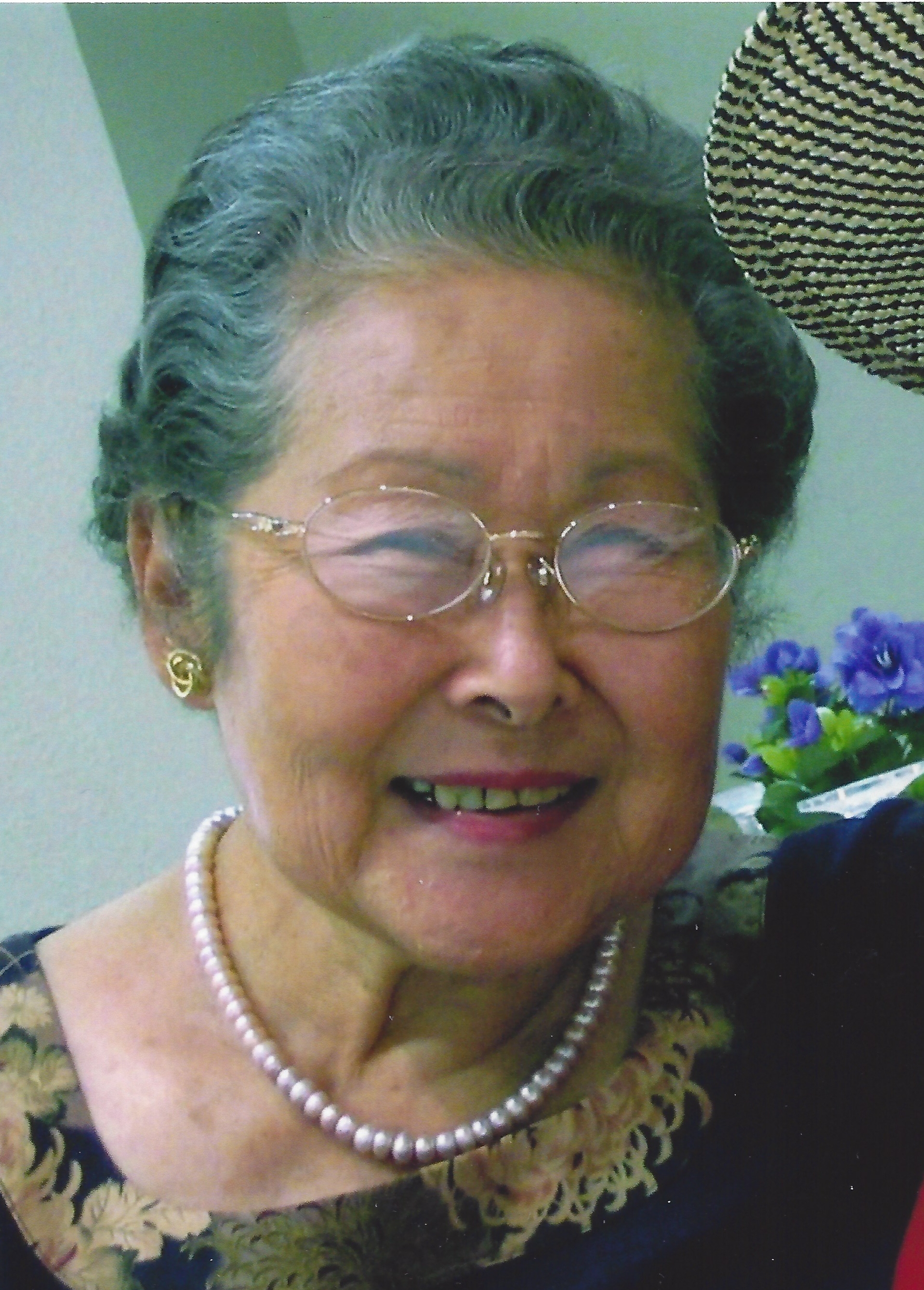
Terry’s Eulogy – The Submissive Wife -“10 Who Made a Difference” Honolulu Star Bulletin 2009

Eulogy and Celebration of Terry Makino-Kaide’s Life

April 21, 1922 to March 30, 2012

Shared by Annette Clay, Charlotte Kaide, Gale Sakaguchi
Written and Presented by Carl Okuyama

This Eulogy represents the warm feelings that were spoken by Mrs. Kaide’s children, cousins, and aunties, who have a great story to share. They said mom touched the hearts of many because of her love, compassion, genuine kindness, and her thoughtfulness toward others, these were her special qualities. She always had great words of wisdom and was the rock and the glue in their family. The family would like to share and celebrate their mother’s life. This is a story of a submissive, nurturing wife, and mother.

—————————————————————————————————————————————-

Terry was born on April 21, 1922 in Maui to Shizuyo Abe and Masato Makino. She was the eldest of nine (9) children.

Terry Abe-Kaide, Hilo, Hawaii

Terry’s mother Shizuyo had a cleaning shop in Hilo and requested that Terry, at age 15 help her in the business and also to provide for her siblings. Terry made this sacrifice.

She attended Hilo Intermediate School, through the 9th grade. In order to honor her mom’s request, Terry was unable to attend high school; this did not stifle Terry’s desire and tenacity to further her education. Terry accepted the challenge to seek further education. On Sundays Terry would go to Mrs. Conquest’s home on Reed’s Island to study typing and shorthand.

It was after her brothers and sister were grown that Terry left for Honolulu to study at the Galusha Business School; earning a degree as a legal secretary. After graduation Terry, began working for Attorney Harlocker in Honolulu who encouraged her to take the civil service test. This led to Mrs. Kaide becoming a court room stenographer.

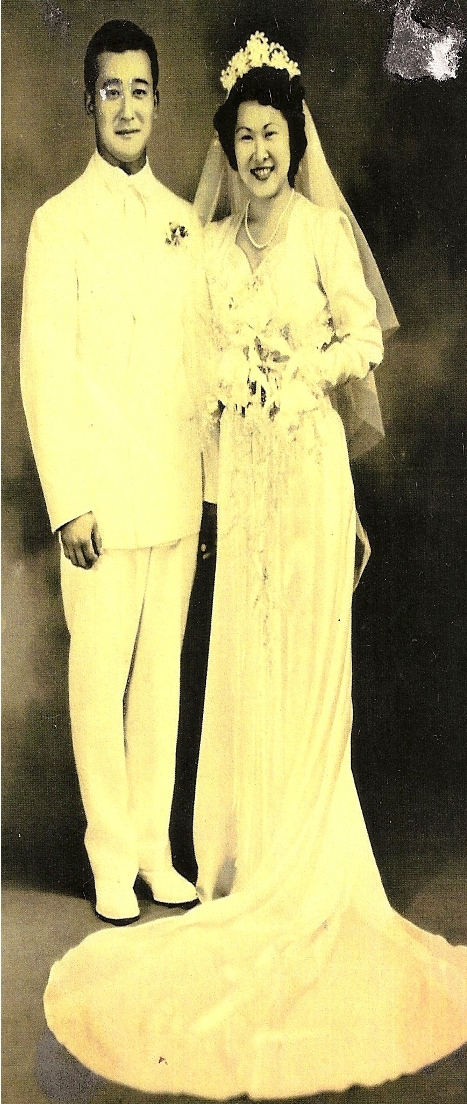
Sidney and Terry Kaide, married October 13, 1945, the beginning of a 64 year marriage.

The Abe’s were friends with the Kaides and this helped lead to the courtship of Terry and Sidney. Sidney was serving his county in the United States’ Army. They were married on October 13, 1945. They had three children, Annette, Charlotte, and Gale.

Besides her full time job at the court, Kaide was the chief administrator for her husband’s business, Sidney Kaide Contractor and Real Estate Developer Enterprise. It was Terry’s second full time job. She was a submissive and loving woman behind a great man who loved his wife. She was her husband’s voice coach and his biggest cheerleader in all his undertakings. Terry also enjoyed line dancing, and was a great singer but modest and humble.

At the same time she cared for her mother-in-law who lived with them and was in a wheelchair due to a stroke. The stamina needed to withstand such huge responsibilities is displayed by Terry’s fruit filled character and witnessed by, patience, determination, tenacity, courage, and long suffering.

Terry was gifted with quite an artistic talent and found time to do Japanese Sumie painting and was a member of the Sumie Society of Hawaii, Director of the Hilo
Chapter, she exhibited her exquisite paintings at the Japanese Brush Painting annual exhibitions in Honolulu Hale City Hall. She also enjoyed taking Ikebana classes,
Japanese flower arrangements. She received her instructor’s degree in teaching Ikebana.

For relaxation time gardening at her Hilo home was her passion, the Kaide’s were awarded a Certificate from the Better Homes and Gardens Magazine for their beautiful garden. Terry was blessed with a green thumb. People would stop to admire her lovely well-manicured garden that was her pride and joy. Another form of relaxation was travel; together Terry and Sidney pretty much sailed around the world by cruise ship.

She also was a good cook, who regularly cooked her favorite dishes for her friends and family. The family loved her Nishime and Shrimp Spaghetti. She would enjoy taking food to Ebesus’ a local FTD Florist, the ladies there were her close friends, among them Aunty Ann Kaya.

Mrs. Kaide culminated her civil service career in the court system as Chief Clerk of the Third Circuit Court in Hilo, which now is filled by attorney Lester Oshiro. She worked for the State Judicial system for 30 years.

The Kaides. L to R: Annette Clay, Sidney Kaide, Charlotte Kaide, Gaye Sakaguchi, Terry Kaide; celebrating the signing of SB190 into law, April 21, 2012, known as the “Love Bill”.

Most recently she was instrumental in passing Hawaii’s Senate Bill 190 into law and was recognized by the Honolulu newspaper Star Bulletin as “10 who made a difference in 2009”.

Terry’s life and marriage of sixty-four (64) years is a role model for our community. Today the sense of family and Ohana is greatly needed in today’s society. A family loves, nurtures, and helps to build a community and nation.

In closing, to find happiness Walt Disney said, ”A man should never neglect his family for business.” Oil Tycoon J. Paul Getty said “I hate to be a failure. I hate and regret the failure of my marriages. I would gladly give all my millions for just one lasting marital success.”

Beloved Terry, thank you for your legacy, thank you for your love.

On behalf of the Kaide Ohana, they would like to say to everyone, Mahalo Nui Loa for all your prayers… Aloha Ke Akua. We love you. Ua Mau Kea Ea O Ka Aina I Ka Pono, O Iesu Cristo!

—————————————————————————-

It was a privilege to meet and become friends of Mr. & Mrs. Sidney Kaide. Their daughter Charlotte is a Christian missionary, she was one of the original individuals in a group that helped spawn Starts at Home.  I witness a miracle of healing after Mr. Kaide repented and accepted Jesus as his savior, this was during a time when Sidney who was normally 175 pound weighed less than 100 pounds, cancer stricken, his skin was an ugly green in color, he could hardly breathe; we were alone at Hilo Hospital’s Extended Care building; I was stunned and a bit afraid as Mr. Kaide repented.

The following year joyfully and with good heath Sidney sang his favorite karaoke songs at his 84th birthday. In later years, Terry also accepted Jesus Christ.  Pastor George Karves shared the Celebration of Life at both Terry’s and Sidney’s life and I was privileged to present both their eulogies.  Thank you to key Hawaii legislators who helped with the passage of SB190, Senator Dwight Takamine, Representatives John Mizuno and Clifton Tsuji.  Also, to Helen Sumoba-Saplan’s care home for seniors that provided a nurturing place for the Kaide’s.  And most importantly to God we give all the Glory … our heavenly father!

Precious Time with Dad – Happiness Starts at Home with a #Gooddad

Precious time with Dad

To find happiness Walt Disney said,  “A man should never neglect his family for business.”  Oil Tycoon J. Paul Getty said “I hate to be a failure. I hate and regret the failure of my marriages. I would gladly give all my millions for just one lasting marital success.”  And, U.S. President Bill Clinton said “The single biggest social problem in our society may be the growing absence of fathers from their homes and children.”

In an article found in the website of  the U.S. Department of  Health and Human Services, Office of Population Affairs, we are reminded and too familiar with the statistics of being raised in a fatherless homes; at JSI Research and Training Institute’s conference,  moderated by, Gilbert Chavez, 06-10-09, he reminds us that fatherless homes are:

  • 5 times more likely to commit crimes,
  • 9 times more likely to drop out of school
  • 20 times more likely to end up in prison
  • Forty percent of all children born in America today will be born to unmarried parents.

This article focuses on how we as fathers can be a #Gooddad to strengthen our relationship with our children and spouse.

First and importantly a family starts at home with a good husband or father who loves God and sacrifices time and resources for their spouse and children.  This is a cornerstone and foundation of a good family. It’s not about how much money we make or how active and recognized we are in the community, instead it’s about the quality time spent with our children and how we lovingly encourage, teach, discipline, and empower our children.

Here are some Ideas for Husbands, #Gooddads, and Parents.

  1. Come to agreement that you place your wife/spouse and children as the most important part in your life.  The material things in life – although very important – will be taken care of even when we often just don’t see how it will all work out.  Dining out, a new television, computer, car, a second car, another promotion at work, a boat, social clubs, an airplane, etc…  are not as important as a healthy close knit family and it’s not the “bling” at the end that makes you sing.
  2. We make sacrifices for our spouses and children, we give up on “my turn”  for them, “my turn” will eventually come up again. Remember what J.P. Getty mentioned? … he regretted ALL his failed marriages and would give up ALL his money for one successful marriage, all his riches did not bring him peace and happiness, he could not buy what he cherished.  Work six days a week and try not to work seven days, instead, have a guiltless day off… one day off will rejuvenate yourself and others around you.
  3. We will not judge our spouse and will accept them as they are, differences and all. Not accepting their differences and arguing with them while having or hiding your own faults may lead to the break up a marriage and family.
  4. Hug your spouse and children daily, they love and need to hear .. “I Love You”; you may share a small gift, or leave a small note. Those three simple words are magic when they come from your heart. Your agape love heals, rejuvenates, builds a family, and strengthens humanity.
  5. Dads, when children come into your life, make changes in your routine to be with them, and to help your wife raise them. You can include the children in your events, so that they don’t feel rejected.  It’s important that you help with the feeding late of nights, change the diapers, take the children to the doctor, read to the children, play with them, discipline and don’t enable them and spoil them, take them to the sports or hobbies they enjoy, go to the parent student conferences, attend their practices, go camping, travel together, and those fun things in life.  The children want and need you in their lives and they will follow you, or they may run away from the home.
  6. Help around the house with chores, especially when both parents work.  Teach the children to have their share of the chores; surprisingly the work gets done and there’s more time for other activities.
  7. Teaching takes time and patience, and when the children learn they become productive members of the family and the home runs more smoothly. Teach them chores, show them good values, help with their school’s homework.  It was gratifying to see in Honolulu Magazine’s May 2010, Mililani School had the highest ranking of over 250 schools in Hawaii, and not surprisingly parent participation they ranked the best in Hawaii and the school did extremely well national quantifiable test scores; this was contrary to the school with the lowest parenting rating and was ranked the worst of the schools  in Hawaii.
  8. Know that each of your children are different, encourage them in their own interests and watch them grow, help them find their way in life and let them live their lives, as parents we are there to encourage them and pick them up when they fall. They will find their way when we let them fall, cry; then hug them, and say,”It will be fine and you’ll get that right on your next try”.
  9. Along life’s path, suffering will occur, you’re not alone, when our children see us suffering, they learn to get through the suffering too, we teach other not to give up.
  10. Take the children out for treat for a job well done, we like rewards that we earn.

***

Starts at Home was started at pot dinners at Carl and Amy’s home on the second Tuesday of the month, they featured a speaker and gave parents a chance to ask questions.  The gathering starts at 5:30 pm and ends before 8:00 pm. If you’re in Hilo, Hawaii, you were welcome to come.

Believing in Your Child’s Potential Increases Your Child’s Success – Encouragement

Encourage your children early in life 1- 7 years of age.

Encourage a child with good faith,  and you will be able to watch a flower bud blossom into a beautiful flower or a chick evolve into an eagle.  Believing in your child’s potential increases your child’s potential in life.  A parent’s faith and belief will help children to have faith and believe in themselves, thus enabling  them to achieve their goals in life. In the educational profession this theory has been called the Pygmalion effect, or the self-fulfilling prophesy.

Know that each of your children are different, with different talents, no child is the same, each child is unique, like snowflakes … not one alike,  so accept John being different from Jimmy. You may become disappointed when the career for your children are not met or they quit the occupation you selected for them. Instead, nurture their spirit to have faith and be pleasantly surprised with their successes in what they choose freely to do in life.  Our love must be unconditional, nurturing, and disciplined.

Here are some words of encouragement.

“Ruth, you have a good memory.”

“Mark, you play the ukulele so well.”

“Deborah, you read well, let’s keep reading.”

“Kimberly, you want to do another math problem, that’s good.”

“Arnold, where did you get all your strength”

“David, wow you sure kick the ball good.”

“Jeffrey, wow you sure can swim and hold your breath a long time.”

“Johnny, you sure planted a lot of seeds, let’s be patient and watch them grow.”

“Justin, you sure can keep focused on playing Lego a long time, that’s a neat car you made.”

Tame Our Tongue not to Speak Discouraging Words

Discouraging words tear down a child’s future so we need to tame our tongue.  When we seek to refrain from discouraging speech, we will find that it will be easy to do.  Often, parents who were themselves raised with discouraging speech will follow the way they were brought up; it’s up to the parents to break this generation curse.  Here are some examples of speech that will discourage a child:

“You’re not good at anything”

“You won’t amount to anything”

“Why can’t you get that right”

“Why aren’t you more like your sisters and brothers?”

“You’re just being silly”

Whether we’re raising our own biological children, adopted children, or those from another family member, remember that each child is different, with unique personalities and talents.  Despite these differences, all children need encouragement and  need to know that their parents believe in them.  What matters is as parents,  we whole-heartedly believe that our children are bright and will reach their full potential.  Believe it, practice it, and our children will too. Love and discipline are gifts to our children.

——————————————-
Wikipedia – Robert Rosenthal is Distinguished Professor of Psychology at the University of California, Riverside. His interests include self-fulfilling prophecies, which he explored in a well-known study of the Pygmalion Effect: the effect of teachers’ expectations on students. From 1962 to 1999 he taught at Harvard, became chairman of the psychology department there in 1992, and Edgar Pierce Professor of Psychology in 1995. On retiring from Harvard in 1999 he went to California.